


Autism Diagnosis / Autism Testing
Before your child can begin ABA (Applied Behavior Analysis) therapy, you must obtain an official autism diagnosis. We offer thorough autism screening, autism testing, and autism diagnosis services. If you suspect your child is displaying autism symptoms, those of a developmental disability, or even a lack of verbal or social interaction skills, our autism center can help.
It’s also important that caregivers recognize that autism symptoms can vary, so it’s essential to seek professional support as soon as you realize autism signs.
If you’ve been researching getting an autism diagnosis, you’ve probably found it can take months or even years to get an official test and diagnosis of autism.
At ABA Centers of America, we are focusing significant resources on the ASD diagnostic assessment process and understanding autism symptoms to eliminate or shorten any wait time.


Our streamlined, four-step process for autism testing and screening:
- Call us for an initial consultation regarding your child’s autism test. We will listen to your concerns and ask some initial autistic screening questions regarding potential autism symptoms. We will also verify any insurance benefits to help you and discuss appointment options.
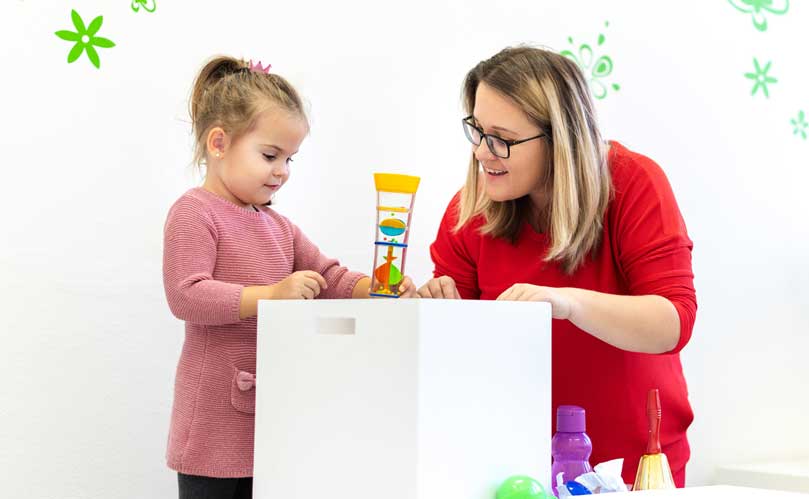
- At your appointment, our clinical team will meet with you and your child. The tests, including the ADOS-2, the current gold standard in autism assessment, are all play/activity based in a warm, friendly setting. In some cases, we may incorporate an Asperger’s test or the Raads R Test to understand autism signs more comprehensively. The typical autism assessment test involves several components and lasts two to four hours.
- After your autism diagnosis test appointment, our medical specialists will review the results of your autism test session, which usually takes one-to-two weeks.
- At a second appointment, we will share our findings and any diagnosis with you, including a written report and recommendations on the treatment of autism, if needed.
ABA Centers of America was founded to help children with autism and related disorders. We pay close attention to the comfort level of your loved one during the autism diagnostic process, and we are generous with our time and support in discussing the results.
ABA Centers of America Works Toward the Following Goals
Learning critical life skills
Alternatives to unwanted behavior
Building up inherent strengths
Developing social and communication skills
Individualized ABA Therapy
At ABA Centers of America, we understand that every neurodivergent individual is unique, and so are their needs. We don’t believe in a “one size fits all” treatment program to address autism symptoms. So our therapy plans are always customized, and they allow clients to work toward mutually agreed-upon goals.
Our treatment begins with a Board-Certified Behavior Analyst (BCBA) getting to know the client and family. They will conduct an assessment to determine recommended program goals based on the autism signs your child is displaying and their developmental goals.
A Registered Behavior Technician (RBT) will then work with the client and family, observing and recording behavioral data that will help the BCBA create targeted programs while monitoring autism symptoms. Each session is customized specifically to the child’s needs and family’s goals.

What to Expect
A typical course of ABA therapy involves 20-40 hours a week for 1-3 years. ABA therapy programs are designed by our Board Certified Behavior Analysts (BCBAs) and conducted by our Registered Behavior Technicians (RBTs). Both are governed and licensed by the Behavior Analyst Certification Board (BACB).
Assessment
Our treatment begins with a BCBA getting to know your family, learning what autism symptoms you’re interested in improving, and conducting an assessment to measure skills and abilities.
Goal Setting
Using the results from the assessment, our BCBAs collaborate with the family to create specific, reachable objectives to address desired behavior, new skills and recommended goals.
Custom Planning
The BCBA develops a program to teach target skills. Then an RBT works directly with the clients to implement the agreed-upon therapy and collect critical data.
Evaluation
The BCBA and RBT work together, measuring targeted skills and making changes to the program if necessary.
Available Services
- In-home ABA Therapy Our autism-care therapists bring their expertise to the environment where the client is most comfortable—home.
- Clinic Services Our center for autism treatment is a good environment for ABA Therapy when in-home treatment is not convenient. Our therapists make sure your child with autism is comfortable and sees our clinic as a place where they come to learn from friends.
- TelehealthWe can work with autistic children and their families to create an effective remote program or a hybrid with some telehealth and some in-person behavioral therapy.
- Caregiver Training For one to two hours a week, you’ll absorb the basics of Applied Behavior Analysis Therapy as you work with your ABA specialist and your child. We emphasize “caregiver” in our training programs because we feel it’s essential to work with anyone and everyone who is a significant presence in the child’s life.
- Community Life Skills We provide training that helps people with autism deal with the demands of daily life. The training often involves real-life settings like the grocery store or a social outing to help people with autism function with as much independence as possible.
Frequently Asked Questions
How long does the autism diagnosis process take?
At ABA Centers of America, we work to reduce unnecessary waiting times by streamlining the evaluation process and helping families access services as efficiently as possible. Unlike the current industry average, which often means waiting more than two years for an autism diagnosis, families at ABA Centers of America can typically complete the process in under three weeks.
Do I need a referral to schedule an autism evaluation?
In many cases, families can contact ABA Centers of America directly to begin the evaluation process. Our team can help determine whether a referral is needed based on your specific insurance requirements.
Does insurance cover autism testing and diagnosis?
Most health insurance plans cover autism testing and diagnosis. We review insurance benefits with families and explain what documentation or authorization they may need before testing.
Can my child receive an autism diagnosis even if symptoms are mild?
Yes. Autism presents differently in every child. Comprehensive evaluations consider communication, behavior, and developmental history, even when signs are subtle or less noticeable.
How do doctors test a child for autism?
Autism testing usually involves a comprehensive developmental evaluation that includes observation, structured assessments, and caregiver interviews. Clinicians examine communication, social interaction, behavior patterns, and developmental history to determine whether a child meets criteria for autism spectrum disorder. Most diagnostic processes combine multiple tools and behavioral observations to create an accurate diagnosis.
What signs usually lead parents to seek an autism evaluation?
Many families pursue autism testing after noticing developmental differences such as delayed speech, limited eye contact, repetitive behaviors, or difficulty interacting with others. These signs can appear during early childhood and often prompt a pediatrician or caregiver to recommend a formal evaluation.
Can my child receive autism therapy without an official diagnosis?
In most cases, insurance-funded ABA therapy requires a formal autism diagnosis before treatment can begin. A diagnostic report confirms that a child meets criteria for autism spectrum disorder and allows providers to recommend medically necessary services.
What tests are used to diagnose autism?
Autism diagnosis relies on several standardized tools combined with clinical observation rather than a single test. One commonly used assessment is the Autism Diagnostic Observation Schedule (ADOS-2), which evaluates communication, social interaction, and behavior patterns. Caregiver questionnaires and developmental history reviews are also included.
What happens after a child receives an autism diagnosis?
After an autism diagnosis, families receive a detailed diagnostic report explaining the evaluation findings and recommended next steps. Clinicians typically discuss treatment options such as ABA therapy, early intervention services, and educational support programs.
How early can a child be tested for autism?
Children can be evaluated for autism during the toddler years when developmental differences become noticeable. Early screening and diagnostic testing allow clinicians to identify signs of autism spectrum disorder sooner and guide families toward appropriate services.
Is autism testing stressful for children?
Autism evaluations are designed to be child-friendly and supportive rather than stressful. Many assessments use play-based activities that allow clinicians to observe how a child communicates, interacts, and responds to social cues.