

How Does ABA Therapy for Preschoolers Differ from ABA for Toddlers

Preschool child playing with colorful balls in a classroom

Table of Contents

What Changes from ABA Therapy for Toddlers to ABA Therapy for Preschoolers?

ABA can change as a child develops, but age alone should never determine the treatment plan. ABA therapy for preschoolers may involve more opportunities to practice skills in group routines, peer activities, and preschool environments, while ABA for toddlers often emphasizes foundational communication, engagement, play, and familiar daily routines.

These are common patterns, not a sequence every child must follow. A four-year-old may still be developing early communication, while a two-year-old may be ready to practice a more complex routine. Assessment, family priorities, the child’s communication and preferences, and progress should guide each program.

How Do Changing Environments Shape ABA Therapy for Toddlers?

The biggest change in ABA during this transition is often the child’s environment, not ABA principles. Preschool-aged children may spend more time with peers, communicate with different adults, follow group schedules, manage more transitions, and participate in longer routines. These experiences can create new opportunities to use developing skills and may also reveal needs that were less noticeable at home.

Early intervention ABA can evolve as these changes happen. The BCBA may revise goals, teaching methods, or practice settings based on data and caregiver input. Turning three does not automatically require a more rigid program or completely different goals.

What Does ABA Therapy for Toddlers Often Emphasize
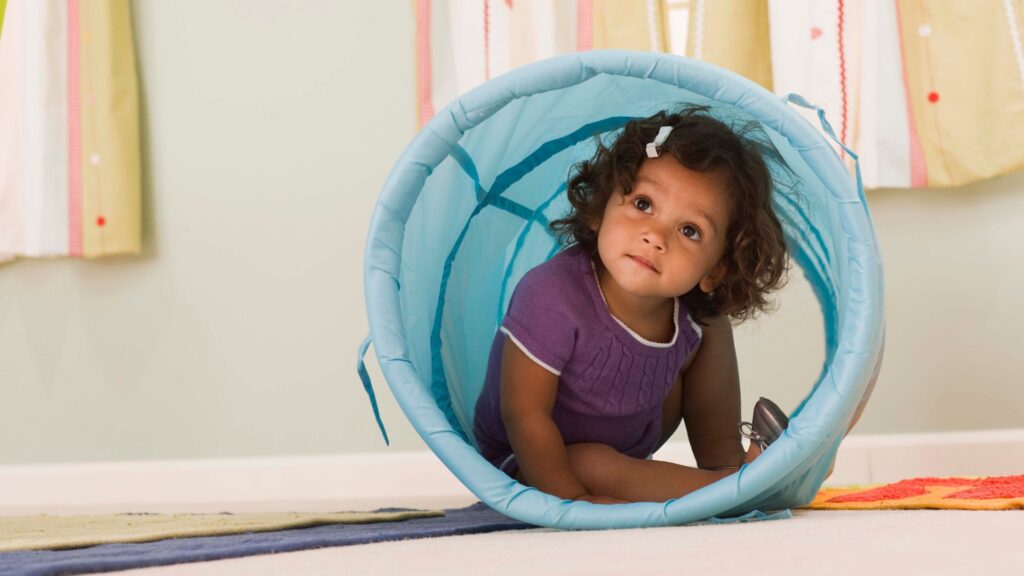
Young child participating in a movement-based play activity as a part of ABA therapy for preschoolers

ABA therapy for toddlers often uses play, movement, caregiver interaction, and familiar routines as learning contexts. Sessions should match the child’s developmental level and create manageable opportunities to communicate, engage, explore, and participate.

Depending on the child, individualized goals may include using speech, gestures, pictures, or an augmentative and alternative communication system to express needs; initiating or responding to meaningful communication; imitating useful actions and developing play skills; participating in dressing or mealtime routines; or moving between familiar activities with support.

Caregiver collaboration matters because toddlers practice emerging skills throughout the day. Parents do not need to turn every interaction into therapy. The clinical team can identify brief opportunities to support a goal during existing family routines.

What Does ABA Therapy for Preschoolers Often Emphasize

Preschool ABA can remain play-based and engaging while reflecting the child’s expanding environments. Goals may involve communicating with others, participating in short group activities, using skills with peers, following a visual schedule, completing additional steps in a daily routine, or requesting help and breaks in different settings.

Added structure does not mean sitting at a table for long periods. It means a child might learn to handle transitions by checking a picture schedule, taking turns during a game, or putting away an item during cleanup. Each activity should have a purpose connected to daily participation.

Preschool goals should also respect the child’s interests, communication, comfort, and autonomy. Asking for help, appropriately declining an activity, communicating sensory discomfort, or requesting a pause may be meaningful functional skills to recognize and support.


How Can ABA Goals Differ Between Toddlers and Preschoolers

Differences usually relate to the complexity of the skills being taught and the situations in which children use them, rather than entirely different teaching methods. The examples below show how therapy may vary, not what children are expected to do at a certain age.

Skill Area

Possible Toddler Emphasis

Possible Preschool Emphasis

Communication

Expressing basic needs with a developing communication method

Communicating across people, activities, and settings

Play

Exploration, imitation, and early shared play

Turn-taking, flexible play, and shared activities

Daily routines

Participating in familiar routines with caregiver support

Completing more steps and requesting help when needed

Transitions

Moving between familiar activities

Using supports across longer or less familiar routines

Participation

Engagement with caregivers and familiar people

Participation with peers, groups, and preschool staff

A child’s skills may not follow this pattern. A preschooler may need foundational communication support, while a toddler may use advanced skills in another area. Age provides context; it does not prescribe goals for ABA therapy for preschoolers or toddlers.

Does Play Still Matter in Preschool ABA?

Yes. Preschoolers continue to learn through play, and play can create meaningful opportunities to communicate, imitate, solve problems, take turns, and adapt when an activity changes. The child’s interests can help the team make practice relevant without requiring adults to direct every activity.

ABA can incorporate learning opportunities into play and familiar activities rather than separating skill development from the child’s everyday experiences.

A 2024 systematic review and meta-analysis of parent-mediated, play-based interventions examined 26 studies involving 1,459 children with autism aged 12 to 72 months.

Researchers found that these interventions had a moderate positive effect on social communication skills and a smaller positive effect on language skills.

Preschool-aged children playing together with colorful balls

Does Age Affect How ABA Therapy Is Provided

Age can provide useful developmental context for ABA therapy, but it should not determine a fixed treatment program. A child’s current communication, adaptive skills, learning needs, environments, family priorities, and progress should guide individualized goals and teaching approaches.

For parents searching for the right age for ABA therapy, this distinction matters. There is no birthday at which every child should begin the same type of ABA program or suddenly move to a more structured form of treatment.

Research also supports looking at early intervention through a developmental lens. A meta-analysis of early interventions for children with autism found that early interventions produced a significant positive effect on social communication outcomes, with children in intervention groups showing greater improvements than those in comparison groups. Participants were approximately 3.5 years old on average, and the researchers also found that age was significantly associated with treatment effects, underscoring the importance of considering a child’s developmental stage and individual needs when planning early support.

Support for autism in toddlers may emphasize skills practiced through familiar routines, caregiver interactions, and play, while preschool support may expand to reflect increasingly complex social and everyday environments.

The approach can evolve as the child’s needs and world change, not simply because they reached a particular age.

What Happens to Early Intervention ABA and Other Services Around Age Three

Around age three, some publicly funded early intervention services may change.

Under the Individuals with Disabilities Education Act (IDEA), eligible children may transition from Part C early intervention services to preschool special education and related services under Part B. The U.S. Department of Education provides guidance to help families understand this transition.

However, turning three does not mean a child is no longer the “right” age for ABA therapy, or other supports.

Child participating in a play-based activity with a therapist in an ABA therapy for preschoolers session

Decisions about early intervention ABA and ongoing therapy should be based on the child’s individual needs and goals, even as other services change.

When Should Parents Seek a Professional Evaluation

Parents can speak with their child’s pediatrician about implementing early intervention ABA when communication, play, movement, behavior, sensory responses, feeding, sleep, or participation in daily routines raises concerns. Prompt evaluation is especially important if a child loses previously acquired skills or experiences a sudden change that could involve pain, illness, hearing, sleep, medication, or another health factor.

An evaluation does not automatically mean a child needs early intervention ABA. It can clarify the concern, consider medical or developmental contributors, and identify potentially helpful referrals or support with different professionals.

How Can You Tell If Support for Autism in Preschoolers Is Growing with Your Child?

Preschool children smiling together during a group activity

Parents can help keep that conversation moving by asking their child’s clinical team questions such as:

  • How do these goals relate to the skills my child currently needs?
  • Do the goals reflect the environments my child participates in now?
  • How are my child’s strengths and interests incorporated into their support?
  • How is progress being measured?
  • When will goals be reviewed or adjusted?
  • How can we support useful skills across home, preschool, and community settings?

Parents can also share what they are seeing outside therapy. Changes in routines, new interests, emerging skills, or situations that have become more challenging can all provide useful context for the clinical team.

At ABA Centers of America, we understand that children’s needs can evolve as their environments and experiences expand. Individualized ABA therapy can grow with them, supporting meaningful skills based on each child’s developmental level rather than following a predetermined age-based path.

If you’re exploring support for autism in preschoolers or wondering how early intervention ABA can adapt as your child grows, our team can help you understand the options available to your family. Call us at (844) 923-4222 or fill out our contact form, and we’ll reach out.

Discover how our autism treatment services can help you.

Get Social With Us

Related Posts

Child participating in an individualized therapy activity with a professional

Types of Therapy for Autism: What Does Your Child Actually Need?

Which therapies does a child with autism need? Learn how ABA, speech therapy, occupational therapy, and school-based services address different needs—and why individualized evaluations can ...
Read More →
Parents and children enjoying a learning activity together at home

ABA Strategies for Parents: Practical Ways to Support Your Child at Home

Discover practical ABA strategies for parents, such as reinforcement, visual supports, choices, modeling, and transition support, and learn how everyday routines can help children develop ...
Read More →

Autism-Friendly Halloween: 11 Tips for an Extraordinary Day!

An autism-friendly Halloween starts with understanding what your child wants and needs. Explore flexible ideas for costumes, trick-or-treating, sensory support, communication, and safety.
Read More →
autism terms

Autism Glossary of Terms: 27 Key Definitions Explained

Understanding common autism terms can make conversations with therapists, educators, and healthcare providers easier to follow. Explore 27 essential terms related to autism, ABA therapy, ...
Read More →
Scroll to Top